
What is Industrial Design?
Industrial design is one of those fields that most people interact with every single day without realizing it. The phone in your hand, the tools in your garage, the knife in your pocket, even the toothbrush on your bathroom counter, everything was intentionally designed by someone who thought carefully about how it should feel, function, and fit into your life.
At its core, industrial design blends creativity with problem-solving. It sits at the intersection of aesthetics and usability, where form and function influence each other. The goal isn’t just to make something look appealing, but to make it work better because of how it looks and feels.
At Seek Apogee, industrial design usually begins with understanding. We meet clients, learn about the problem they want to solve, and study the people who will eventually use the product. We pay attention to things like:
How the user holds the product
What their environment is like
What frustrates them about existing solutions
How we can reduce unnecessary steps or friction
What emotional impression the product should give
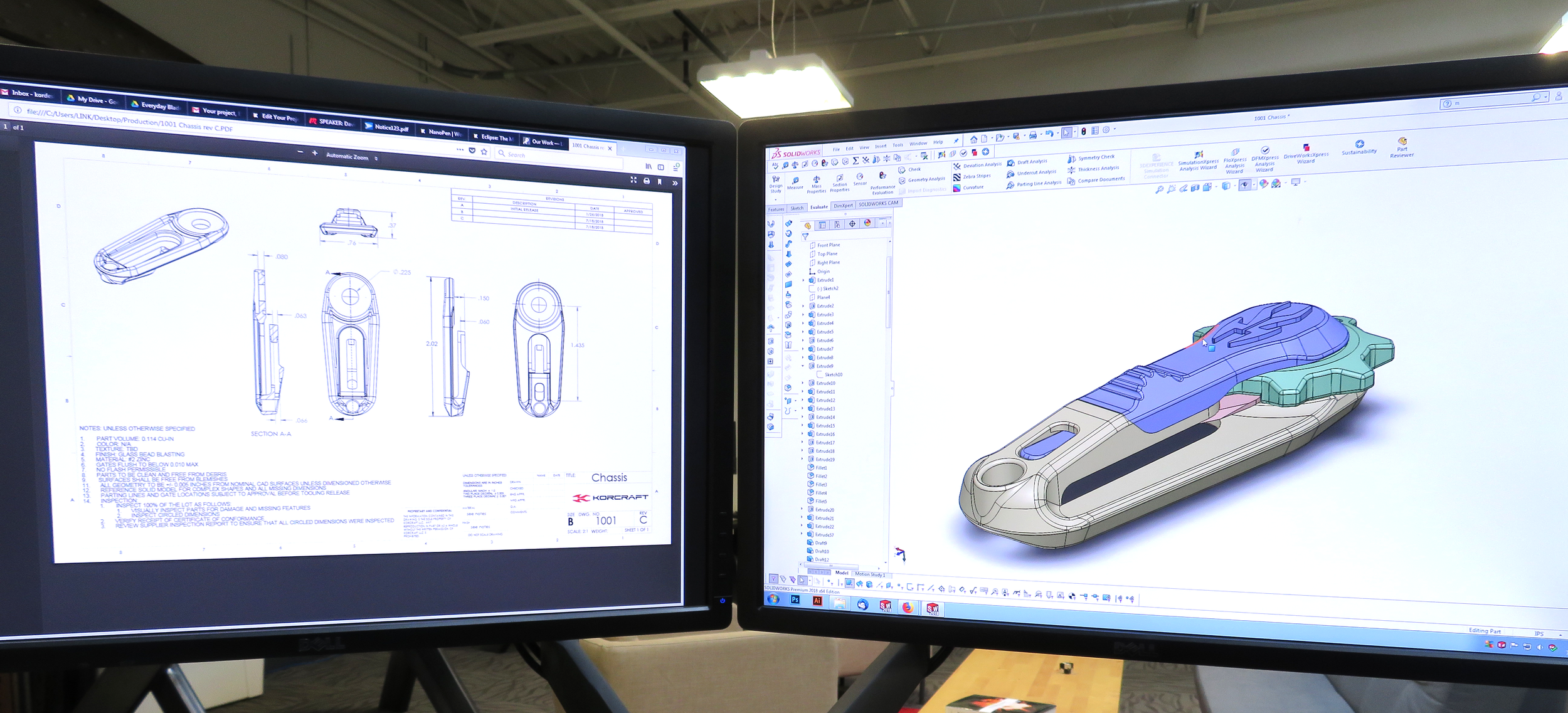
Once we understand the user and the purpose, we start sketching ideas. This is where the exploration happens, where shapes are tested, ergonomics are refined, and we experiment with proportions, materials, and details. Those sketches evolve into CAD models where every angle, radius, and surface becomes precise.

This is also the stage where design and engineering overlap heavily. We think about manufacturability, durability, assembly, and cost long before anything goes to prototype. A product might look incredible on a screen, but it also needs to be realistic to build, affordable to produce, and reliable over years of use.
A well-designed product feels effortless. It doesn’t confuse the user or force them to adjust to it. Instead, it feels like it fits naturally into their routines, their hand, and their expectations. That’s the heart of industrial design, creating products that aren’t just functional, but enjoyable. If you’d like a closer look at how this is used in a real-world product- click here.